
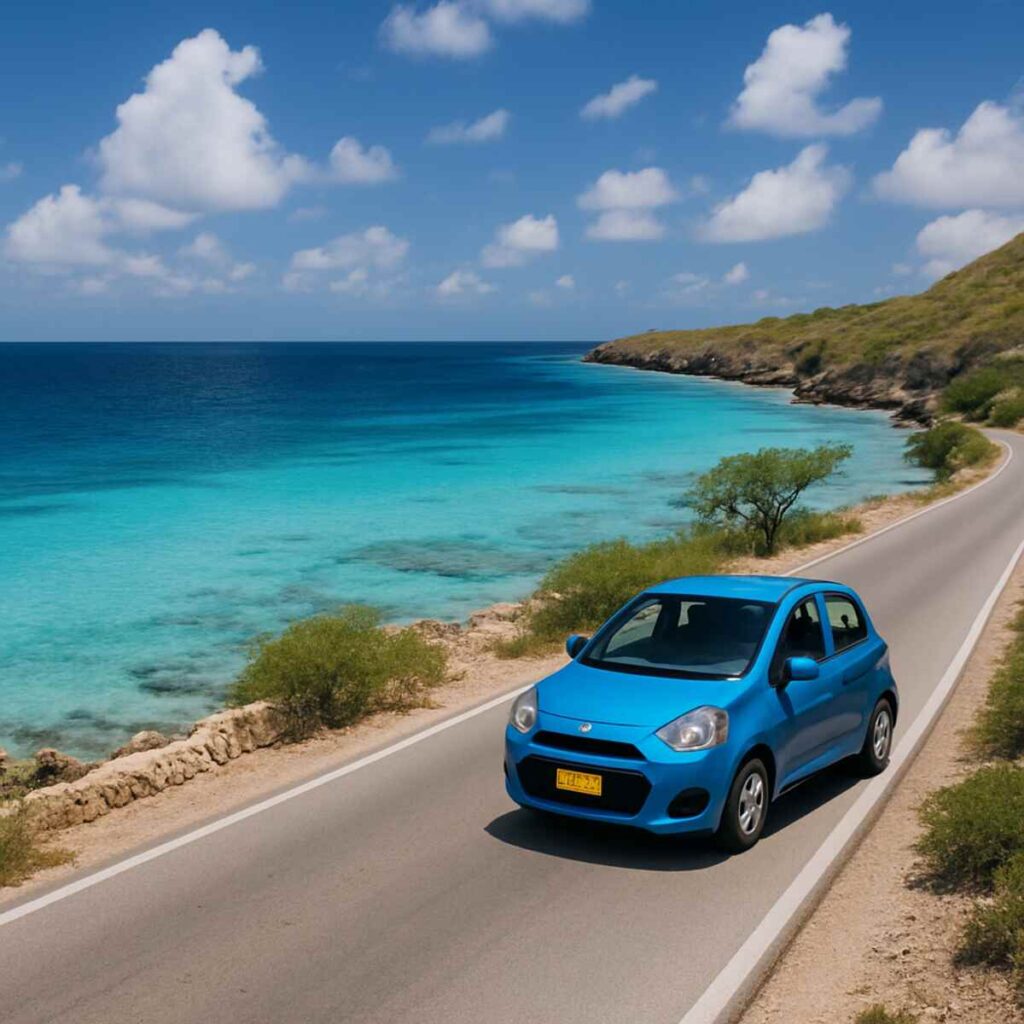

Welcome to Curacao, a vibrant jewel in the southern Caribbean Sea. Known for its dazzling turquoise waters, hidden coves, vividly painted Dutch colonial architecture, and rugged desert landscapes, this island is a paradise waiting to be explored. However, to truly unlock everything this spectacular destination has to offer, you need the freedom of the open road. If you plan to rent car Curaçao for your upcoming vacation, you are making the best possible decision for your itinerary. The best guide to finding rent car curacao.
While some visitors choose to stay tethered to their all-inclusive resorts, the real magic of Curacao lies off the beaten path. It is found in the secluded beaches of Westpunt, the lively street art alleys of Scharloo, and the sweeping vistas of the island’s national parks.
This comprehensive, ultimate guide will cover everything you need to know about securing a curacao car rental. From navigating local traffic laws and understanding insurance policies to finding the most reliable agencies and mastering the gas station protocols, this article is your all-in-one resource. Let’s dive into how you can ensure a smooth, safe, and unforgettable driving adventure on the island.
The Ultimate Freedom: Public Transport Versus Exploring by Car
When planning an island getaway, one of the first questions travelers ask is how they will get around. In Curacao, the debate between utilizing public transportation and renting your own vehicle is quickly settled once you understand the island’s layout.
Curacao is larger than many people realize, stretching about 40 miles (64 kilometers) from its southeastern tip to the northwestern point. The public transportation system primarily consists of two options: large government-run buses called “Konvoi” and smaller, privately owned vans known as “busjes” (which have the word “BUS” on their license plates).
While the public transport system is highly affordable and offers a genuinely authentic local experience, analyzing public transport versus exploring by car reveals significant limitations for tourists. Buses run on fixed, often infrequent schedules. If you want to visit the stunning, remote beaches of the west coast—such as Playa Kenepa Grandi or Cas Abao—relying on a bus means your schedule is entirely dictated by the transit timetable. Missing the last bus back to Willemstad can leave you stranded miles from your hotel. Furthermore, buses simply do not reach many of the island’s most spectacular, tucked-away natural wonders.
Opting for a car hire curacao gives you unparalleled flexibility. You can wake up early to snorkel with sea turtles at Playa Grandi before the crowds arrive, stop for a spontaneous roadside lunch of iguana stew or fresh red snapper at a local truk’i pan (food truck), and chase the sunset at the rugged Shete Boka National Park—all on your own timeline. A rental vehicle transforms your vacation from a rigid, limited tour into a boundless, personalized adventure.
Essential Requirements for Renting a Vehicle
Before you start browsing for the perfect island cruiser, you must ensure you meet the legal and administrative criteria required to drive on the island. The driving in Curacao requirements for tourists are generally straightforward, but it pays to be prepared to avoid any hiccups at the rental counter.
Age Restrictions
First and foremost is the minimum age to hire a motor vehicle. In Curacao, the legal driving age is 18, but rental agencies impose their own, stricter rules. Most reputable car rental companies require the primary driver to be at least 21 years old. Furthermore, if you are between the ages of 21 and 24, you will likely be subject to a “young driver surcharge,” which can add a significant daily fee to your rental agreement. Conversely, some agencies also cap the maximum rental age at 70 or 75 years old. Always check the specific age policies of your chosen agency before booking.
Driver’s License and International Permits
Tourists are permitted to drive in Curacao using a valid driver’s license from their home country. Whether you hold a license from the United States, Canada, the European Union, or South America, you can legally operate a vehicle on the island for up to six months.
However, you might wonder about the international driving permit requirements Curacao imposes. While an International Driving Permit (IDP) is not strictly legally required if your domestic license is printed in a Roman alphabet (English, Spanish, Dutch, etc.), it is highly recommended if your home license is printed in a non-Roman alphabet (such as Cyrillic, Arabic, or Mandarin). Even if your license is in English, carrying an IDP serves as an extra layer of officially translated identification, which can be helpful if you are pulled over for a routine police check or involved in a minor traffic incident.

The Security Deposit
A critical element of the rental process is the credit card deposit for island transport. Almost every legitimate rental agency will require a valid major credit card (Visa, MasterCard, and sometimes American Express) in the primary driver’s name. Debit cards, prepaid cards, and cash deposits are rarely accepted for the security hold.
The agency will place a pre-authorization hold on your card to cover potential damages, traffic fines, or missing fuel. This hold typically ranges from $300 to $1,000 USD, depending on the vehicle class and the level of insurance you purchase. Ensure your credit card has sufficient available credit to accommodate this hold, as it will reduce your available spending limit for the duration of your trip. The hold is released a few days after you return the vehicle in its agreed-upon condition.
Choosing the Right Vehicle for Your Island Itinerary
Selecting the proper vehicle is about more than just picking your favorite color; it is about matching the car’s capabilities to your planned activities. The Curacao landscape transitions from perfectly paved city streets in Willemstad to deeply rutted dirt tracks leading to hidden coastal coves.
Economy Cars vs. SUVs
For couples or solo travelers planning to stick mostly to Willemstad, Jan Thiel, and the well-paved main roads leading to major commercial beaches like Mambo Beach, a compact or economy car is perfectly sufficient. These vehicles are easy to maneuver, simple to park in tight city spaces, and highly fuel-efficient.
However, if your itinerary is packed with off-the-beaten-path exploration, consider upgrading to a mid-size SUV or a crossover. Many of the access roads to Curacao’s most beautiful western beaches (the “Banda Abou” region) are unpaved, uneven, and riddled with potholes. The higher ground clearance of an SUV will save you from scraping the undercarriage of a low-profile economy car—damage that is rarely covered by standard insurance.
Do You Need Four-Wheel Drive?
A highly frequent question among adventure-seekers is: do I need a 4×4 for Christoffel National Park? The short answer is no, but with caveats.
Christoffel National Park is home to the island’s highest peak, Mount Christoffel. The park features a few scenic driving routes. The primary roads within the park are paved, albeit narrow and occasionally steep. A standard front-wheel-drive vehicle can handle these paved sections without issue, provided you drive cautiously. However, if you plan to venture onto the unpaved, secondary dirt trails within the park, or if you plan to explore the untamed eastern side of the island (such as the rugged paths near Sint Joris Baai), a 4×4 is highly recommended.
It is also crucial to familiarize yourself with the off-road driving rules for island visitors. Most standard rental agreements strictly prohibit taking standard 2WD vehicles off paved roads. If you take a compact car onto a jagged dirt trail and get a flat tire or damage the suspension, you will be entirely financially responsible, as off-roading instantly voids most insurance policies. If your heart is set on true off-roading, you must rent a specialized 4×4 vehicle from an agency that explicitly permits off-road use.
Transmission Choices
Another vital consideration is the choice between automatic vs manual transmission rentals. Historically, manual (stick-shift) cars were the standard in the Caribbean and Europe, but today, automatic vehicles dominate the Curacao rental market due to the high volume of North American tourists.
If you strictly drive an automatic at home, do not attempt to learn how to drive a manual on the steep, winding roads of Curacao. Automatic cars are readily available, though they sometimes carry a slight premium in price. If you prefer a manual transmission, be sure to request it explicitly well in advance, as their inventory is generally much smaller.
Navigating the Rental Market: Finding the Best Deals
The island boasts a robust and competitive rental market, offering everything from ultra-budget local fleets to premium international brands. Finding the ideal rent car curacao requires a bit of research, timing, and an understanding of how the local market operates.
International Giants vs. Local Independent Agencies
When searching for the best vehicle hire agencies in Willemstad and at the airport, you will encounter familiar names like Alamo, Avis, Budget, Enterprise, Hertz, and National. Booking with an international brand offers a sense of security, standardized customer service, and the ability to earn loyalty points. Their fleets are typically newer, heavily maintained, and easily bookable online.
On the other hand, Curacao is home to dozens of highly reputable, locally owned rental agencies. Companies like Just Drive Curacao, D&D Car Rental, and Prins Car Rental often provide more personalized service. Local agencies frequently offer competitive base rates, include extras like free additional drivers, and provide a more “island-friendly” approach to customer service, such as dropping the car off directly at your resort or Airbnb.
Beware of Hidden Costs
While a daily rate of $25 USD might look incredibly appealing online, it is essential to read the fine print. To keep your budget intact, you must be vigilant about hidden fees in local vehicle rentals.
Common unexpected charges include:
- Mandatory Local Taxes: Curacao levies a local sales tax (OB) of 6% or 9% on rental cars, which is sometimes omitted from the initial quoted price.
- Airport Surcharges: Picking up your car directly at the airport often incurs an additional “airport concession fee” of 10% to 12%.
- Additional Driver Fees: If you plan to share the driving responsibilities with your spouse or travel companion, many agencies charge a daily fee (often $5 to $10 per day) for an extra driver.
- Cleaning Fees: Curacao is a sandy, dusty island. If you return the vehicle with exceptionally dirty interiors—especially wet, sand-caked seats or heavy mud—you may be hit with a hefty deep-cleaning fee. Always shake off your towels and brush off the sand before getting into the car.
- Late Return Fees: Island time is real, but rental agencies run on strict clocks. Returning a car even an hour late can sometimes trigger a full extra day’s charge.
By asking upfront for a fully inclusive quote—often termed an “out-the-door price”—you can accurately compare rates between different agencies and avoid unpleasant surprises at the checkout counter.
The Arrival: Streamlining Your Airport Experience
After a long flight, the last thing you want is a stressful, confusing process to get the keys to your vacation vehicle. Understanding the Hato Airport vehicle pick up process beforehand will ensure a seamless transition from the runway to the roadway.
Curacao International Airport (Hato Airport – CUR) is relatively small, modern, and highly efficient. Once you clear immigration and collect your bags from the luggage carousels, you will pass through customs and exit into the main arrivals hall.
On-Site Airport Rentals
If you booked with a major international brand or a large local agency with a dedicated airport desk, you will find their kiosks located immediately to your right as you exit the customs area, still within the terminal building, or in the dedicated car rental center just a short two-minute walk across the street from the arrivals terminal.
The process here is standard: present your reservation, passport, driver’s license, and credit card. Once the paperwork is signed and the deposit is secured, you will be handed the keys and directed to the designated parking lot to locate your vehicle.
Off-Site Rentals and Shuttles
Many smaller, independent agencies do not pay the high overhead to maintain a physical desk at Hato Airport. Instead, they offer a “meet and greet” or shuttle service. If you choose this route, an agency representative will usually be waiting for you outside the arrivals hall holding a sign with your name.
They will either walk you to your car parked in the standard airport parking lot or help you load your luggage into a shuttle van for a quick 5-to-10-minute drive to their off-site office. While this process might take a fraction longer than an on-site rental, off-site agencies frequently offer significantly lower daily rates because they avoid airport concession fees.
The Vehicle Walk-Around
Regardless of where you pick up the car, the most crucial step of the Hato Airport vehicle pick up process is the initial vehicle inspection. Do not rush this step.
Walk around the entire vehicle with the rental agent. Point out every single scratch, dent, ding, and windshield chip, no matter how minor. Ensure the agent marks these on the official condition report. It is highly recommended that you use your smartphone to take clear, well-lit photos and a slow continuous video of the car’s exterior, interior, tires, and fuel gauge before you drive away. This digital evidence is your absolute best defense against any unwarranted damage claims when you return the vehicle.
Demystifying Insurance: Protect Your Vacation Peace of Mind
Insurance is often the most confusing—and expensive—part of securing a curacao car rental. Standing at the counter while an agent lists off various acronyms (CDW, LDW, TPL) can be overwhelming. Understanding your options before you arrive is paramount.
Third-Party Liability (TPL)
In Curacao, basic Third-Party Liability insurance is required by law and is almost always included in the base price of your rental. This covers damage to other people’s property or injuries to other individuals if you are at fault in an accident. However, TPL does not cover any damage to your rental vehicle.
Collision Damage Waiver (CDW)
To protect the rental vehicle itself, agencies offer a Collision Damage Waiver (CDW) or Loss Damage Waiver (LDW). This is where you must make a critical decision. A standard CDW will limit your financial liability if the car is damaged or stolen, but it usually comes with a high deductible (often ranging from $500 to $1,500 USD). If you get into an accident, you are responsible for paying the repair costs up to the deductible amount.
For total peace of mind, many travelers opt to purchase a full insurance coverage collision damage waiver, sometimes referred to as “Super CDW” or “Zero Deductible Coverage.” While this premium insurance can add $15 to $30 a day to your rental cost, it reduces your personal liability to zero (or near zero) in the event of an accident, scratch, or theft. Given the narrow, stone-walled streets of Willemstad and the rough dirt roads leading to beaches, full coverage is a worthwhile investment for a stress-free holiday.
Credit Card Insurance: Read the Fine Print
Many premium travel credit cards (like the Chase Sapphire Preferred or certain Amex cards) offer built-in rental car insurance if you use the card to pay for the entire rental and decline the rental agency’s CDW.
If you plan to rely on your credit card’s insurance in Curacao, you must contact your credit card provider before your trip. Ask them specifically if they provide primary coverage in Curacao (as some cards exclude certain countries). Furthermore, be aware that if you damage the vehicle, the rental agency in Curacao will likely charge your credit card for the full cost of the damages immediately. It will then be your responsibility to file a claim with your credit card company to seek reimbursement once you return home.
Always note that most standard CDW policies and credit card insurances exclude damage to tires, wheels, the undercarriage, and the windshield, as well as damage caused by driving under the influence or driving off-road.
Hitting the Road: Traffic Laws and Local Driving Culture
With the keys in hand and the paperwork signed, it is time to hit the road. Driving in a new country can be intimidating, but Curacao is generally a very easy and safe place to drive. The roads are mostly well-maintained, traffic is usually manageable outside of peak rush hours, and the island uses standard international driving rules.
The Basics
In Curacao, driving is on the right-hand side of the road—the same as in the United States, Canada, and most of Europe. Seatbelts are strictly mandatory for the driver and all passengers. The use of a handheld mobile phone while driving is illegal and heavily fined; if you need to use your phone for GPS navigation, bring a dashboard mount from home.
Speed limits are strictly enforced, though you will rarely see police cars running radar. Instead, keep your eyes out for speed cameras. The general speed limits (unless otherwise posted) are:
- Built-up, urban areas (towns, neighborhoods): 40 km/h (approx. 25 mph)
- Outside built-up areas (main roads): 60 km/h (approx. 37 mph)
- The main ring road/highway (Helmin Magno Wiels Boulevard): 80 km/h (approx. 50 mph)
All speedometers and road signs are in kilometers per hour.
Mastering the Roundabouts
One of the most important aspects of driving on the island is navigating roundabouts in Willemstad and the surrounding areas. Curacao uses a vast network of roundabouts (traffic circles) rather than traditional traffic lights to manage intersection flow.
The golden rule of the Curacao roundabout is: traffic already inside the roundabout has the absolute right of way. As you approach, you must yield to vehicles coming from your left.
Furthermore, many of the larger roundabouts in Willemstad have two lanes. If you need to take the first exit (turning right), stay in the right/outside lane. If you are going straight or taking the third exit (turning left), you should generally enter the inner lane of the roundabout, signaling your intention to exit as you pass the exit prior to yours. Always use your turn signals when exiting a roundabout; local drivers rely heavily on these indicators to keep traffic flowing smoothly.
Right of Way at Intersections
Another unique quirk of driving in Curacao relates to intersections without signs or markings. At an uncontrolled intersection (an intersection with no stop signs, yield signs, or traffic lights), traffic approaching from your right has the right of way. This rule applies universally across the island, even if you are on a seemingly “main” road and the car on the right is emerging from a smaller side street. Always approach unmarked intersections with caution.
The Driving Culture
The local driving culture in Curacao is generally courteous but can be fast-paced. You will frequently encounter local drivers who flash their headlights at you. In North America, a flash of the headlights often means “watch out” or “speed trap ahead.” In Curacao, however, a driver flashing their headlights is usually being polite—they are yielding their right of way to let you turn across traffic or pull out of a driveway. If a local flashes their lights and slows down, a friendly wave of acknowledgment as you make your move is highly appreciated.
You should also be prepared for roaming wildlife. When driving towards the western side of the island (Banda Abou), it is very common to encounter herds of wild goats, stray dogs, and occasionally donkeys crossing the road. Drive at a reasonable speed, especially at night when many of the rural roads are completely unlit, to ensure you can stop safely if an animal wanders into your path.
Practicalities: Fueling Up and Parking Safety
To keep your road trip moving smoothly, you need to understand the local logistics of buying gas and parking your vehicle safely.
Navigating Curacao Gas Stations
Running out of gas is a surefire way to ruin a beach day. Gas stations in Curacao are plentiful in and around Willemstad, but they become increasingly sparse as you drive west toward Westpunt. Always ensure you have at least a half-tank of fuel before embarking on a long drive to the western beaches.
The process of refueling is slightly different from what many tourists are used to. You cannot simply pull up to the pump, swipe your credit card, and start fueling. Instead, you must understand the gas station payment methods on the island.
Almost all gas stations in Curacao operate on a strictly pre-pay system. The general process is:
- Pull up to an available pump and note the pump number.
- Walk over to the cashier’s booth (often behind bulletproof glass).
- Tell the cashier your pump number and the amount of money you want to put in.
- Pay the cashier.
- Return to your car and pump the gas. The pump will automatically stop at the exact amount you paid for.
If you want to completely fill your tank, you have two options. You can either hand the cashier a large bill (e.g., 100 Antillean Guilders), pump until the car is full, and then go back to the cashier to receive your exact change. Alternatively, if you are paying by card, you can ask them to pre-authorize the card for a high amount, fill the tank, and then return to the cashier to finalize the exact transaction amount.
Most gas stations are operated by the national petroleum company, Curoil. While most modern stations accept international credit cards (Visa and MasterCard are the most reliable), their card machines can occasionally experience network dropouts. Therefore, it is highly recommended to always carry sufficient cash (either Antillean Guilders or US Dollars) to pay for a tank of gas, just in case.
Another local term you might see is “Pagatinu.” While this system is primarily used for prepaid household electricity in Curacao, some tourists confuse it with gas payments. At gas stations, you are simply pre-paying the cashier for fuel; you do not use the Pagatinu system for your rental car.
Parking Smart and Staying Safe
Curacao is generally a very safe island for tourists, but petty theft, particularly crimes of opportunity like car break-ins, can occur. This is especially true in remote areas.
When planning your beach hopping, you must prioritize parking safety tips for remote beaches. Locations like Playa Forti, Daaibooi, and the rugged viewpoints of the northern coast often feature dirt parking lots surrounded by dense brush, leaving vehicles out of direct eyesight.
To protect your rental car and your belongings, follow these golden rules:
- Leave Nothing Visible: Never leave a bag, backpack, camera, sunglasses, or even a charging cable visible on the seats. If a thief sees a bag, they will assume there are valuables inside and may smash a window to get it.
- Use the Trunk: If you must bring valuables, place them in the trunk before you arrive at your destination. Do not park at a remote beach, open your trunk, put your expensive camera inside, and then walk away; anyone watching will know exactly where your valuables are.
- Leave Windows Slightly Cracked: Some seasoned travelers recommend leaving the car windows cracked just a fraction of an inch to keep the interior heat down, and more importantly, leaving the glovebox open and empty to physically show potential thieves that there is absolutely nothing of value inside the vehicle.
- Park in Paid Lots When Possible: Beaches like Mambo Beach, Jan Thiel, and Cas Abao have managed, gated parking lots with attendants. The small entrance or parking fee (usually a few dollars) is well worth the added security.
- Willemstad Parking: When parking in the capital city of Willemstad (Punda or Otrobanda), utilize the large, free public parking lots near the cinema in Otrobanda or the Waaigat parking area in Punda. Alternatively, there are metered street parking spots. If you use a metered spot, you must purchase a ticket from the nearby machine and display it clearly on your dashboard to avoid a wheel clamp (boot) and a hefty fine.
The Ultimate Curacao Road Trip Itinerary
Now that you are fully equipped with the knowledge of how to secure your car hire curacao and navigate the local roads safely, it is time to put that vehicle to use. Having a car allows you to experience the diverse, contrasting beauty of the island. Here is a suggested driving itinerary that highlights why renting a vehicle is an absolute must.
Day 1: Exploring the Historic Heart of Willemstad
Start your journey by driving into Willemstad. Park your car in the Waaigat lot and explore the city on foot. Walk across the famous floating Queen Emma Pontoon Bridge, connecting the historic districts of Punda and Otrobanda. Admire the iconic, pastel-colored Handelskade buildings reflecting in the water.
In the afternoon, hop back in your car and take a short drive to the Scharloo district. Once an affluent residential neighborhood, Scharloo is now famous for its spectacular, larger-than-life street art murals painted by local artists. Driving through these colorful streets allows you to easily pull over and snap incredible photos without wearing yourself out in the tropical heat.
Day 2: The Rugged North and Westpunt Beaches
This is the day you will truly be thankful for your rental car. Pack your trunk with snorkeling gear, a cooler full of water and snacks, and head northwest on the Weg Naar Westpunt.
Your first stop should be Shete Boka National Park on the rugged northern coast. Here, massive ocean waves violently crash into underground limestone caverns. The terrain is rocky and lunar-like. You can drive from boka (inlet) to boka, parking near the viewing platforms to witness the raw power of nature.
Next, drive to Playa Grandi (also known as Playa Piskado). While it is a working fisherman’s beach rather than a pristine lounging spot, it is famous for the wild sea turtles that gather near the pier to eat fish scraps.
Continue your drive to Playa Kenepa Grandi (Grote Knip), arguably the most photographed beach in Curacao. The viewpoint from the parking lot overlooking the electric-blue water is breathtaking. Because you have a car, you can stay as long as you like, swimming in the calm, clear waters before driving back to your resort as the sun sets.
Day 3: Nature, Culture, and Flamingos
Start your morning early and drive to the salt pans of Jan Kok (Saliña Sint Marie). There is a dedicated viewing platform right off the main road where you can park safely. Here, you will often find a large flock of vibrant pink flamingos wading in the shallow, mirror-like waters. It is a phenomenal, peaceful sight that tour buses rarely give you enough time to appreciate.
From there, drive up towards Christoffel National Park. Even if you choose not to hike to the peak, the scenic driving routes through the park offer stunning panoramic views of the island’s flora and fauna. Remember the off-road driving rules for island visitors—stick to the paved paths unless you rented a specific 4×4 vehicle.
In the afternoon, drive down to Playa Porto Mari, famous for its excellent snorkeling reef, comfortable beach amenities, and the resident wild pigs that occasionally wander along the sand.
Day 4: The Wild East – Sint Joris Baai and Jan Thiel
To contrast the calm western beaches, take your car to the eastern side of the island. Drive out to Sint Joris Baai, a massive inland bay famous for kite surfing. The roads out here become dustier and less developed, offering a feeling of true isolation and adventure.
In the afternoon, navigate towards the upscale Jan Thiel area. The roads here are perfectly manicured. You can park near Jan Thiel Beach to enjoy a luxury beach club experience, complete with infinity pools, oceanfront dining, and a vibrant sunset happy hour. Having a rental car means you don’t have to worry about finding a taxi back to your hotel late at night after enjoying a cocktail or two (always ensuring you have a designated driver, of course).
Final Thoughts: Embrace the Journey
Securing a rent car Curaçao is the master key to unlocking the true essence of this magnificent Caribbean island. While the process requires a bit of research—from understanding the minimum age to hire a motor vehicle to deciding between automatic vs manual transmission rentals and securing the right credit card deposit for island transport—the reward is immeasurable.
When you hold the keys to your own vehicle, you are no longer just a tourist observing the island; you become a traveler actively experiencing it. You dictate the pace. You choose which hidden dirt road to explore, which local food stand to patronize, and which remote beach to claim as your own private paradise for the afternoon.
By familiarizing yourself with the Hato Airport vehicle pick up process, investing in a full insurance coverage collision damage waiver for peace of mind, and respecting the local driving rules and parking safety tips for remote beaches, you guarantee a safe, seamless, and spectacular vacation.
So buckle up, turn on the local radio, roll the windows down to let in the warm trade winds, and prepare for the ultimate Curacao road trip. The open roads of this colorful island are waiting for you.