


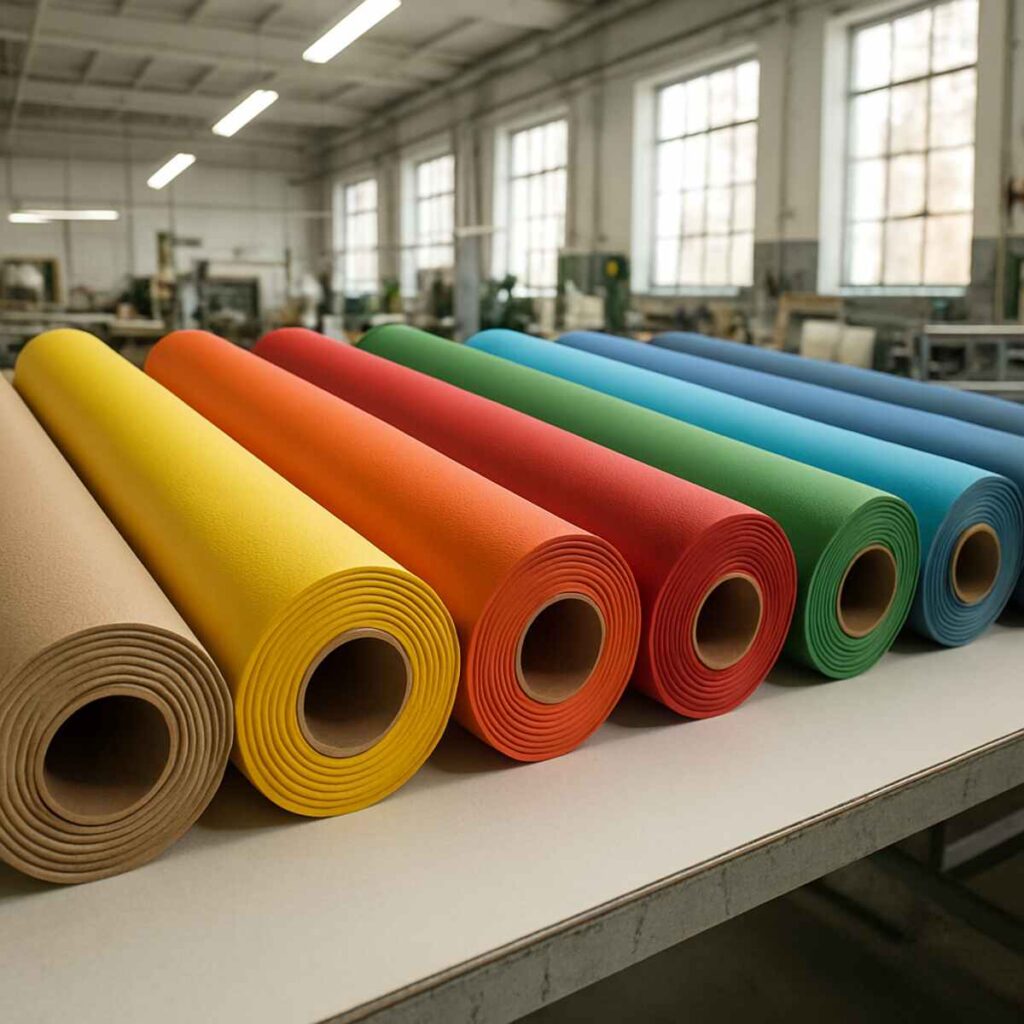
The global textile and material industry is undergoing a profound transformation. As consumers become increasingly conscious of animal welfare and environmental impact, the demand for high-quality, sustainable alternatives to animal hide has skyrocketed. At the epicentre of this global supply chain is China. However, the narrative surrounding synthetic leather production in Asia has shifted dramatically over the past decade. Obtain the Best information about China faux leather supplier.
Gone are the days when sourcing from a China faux leather supplier simply meant buying the cheapest, solvent-heavy PVC available. Today, the industry is marked by high-tech innovation, rigorous environmental standards, and a deep commitment to sustainable practices. Whether you are a boutique fashion brand, an automotive interior designer, or an international furniture maker, understanding this new landscape is critical.
In this comprehensive guide, we will explore the sustainable evolution of China’s synthetic leather industry. We will dive deep into materials science, regional manufacturing hubs, quality control, and sourcing strategies, equipping you with the knowledge needed to partner with a reliable faux-leather manufacturer and successfully import premium, eco-friendly materials.
The Sustainability Revolution in Synthetic Leather
For decades, the synthetic leather industry faced valid criticism regarding its environmental footprint. Traditional manufacturing processes relied heavily on toxic solvents, particularly Dimethylformamide (DMF), to dissolve polyurethane resins. However, driven by stringent government environmental policies and shifting global consumer demand, progressive Chinese factories have completely overhauled their production lines.
The Shift to Water-Based Polyurethane
The most significant advancement in sustainable synthetic fabric is the transition from solvent-based to water-based manufacturing. Understanding the benefits of eco-friendly, water-based polyurethane leather is crucial for any brand looking to market sustainable products.
Unlike traditional PU, water-based PU uses water as the primary solvent. The benefits include:
- Zero Toxic Solvents: The process completely eliminates DMF, making it much safer for factory workers and end consumers.
- Lower VOC Emissions: Volatile Organic Compounds (VOCs) are drastically reduced, preventing the “chemical smell” often associated with cheap artificial leather.
- Reduced Energy Consumption: Curing water-based PU requires less energy, significantly lowering the factory’s overall carbon footprint.
- Enhanced Biodegradability: While not entirely biodegradable, newer iterations of water-based PU are designed to break down much faster than their petroleum-heavy predecessors.
By partnering with a forward-thinking China faux leather supplier that utilizes water-based technology, brands can confidently market their products as non-toxic, vegan, and environmentally responsible.
Decoding Material Science: Choosing the Right Synthetic Leather
Not all synthetic leathers are created equal. When entering the faux leather wholesale market, buyers are often overwhelmed by the variety of materials available. To make an informed decision, you must understand the chemical composition and physical properties of the fabrics you are sourcing.
PU Leather vs. PVC Leather
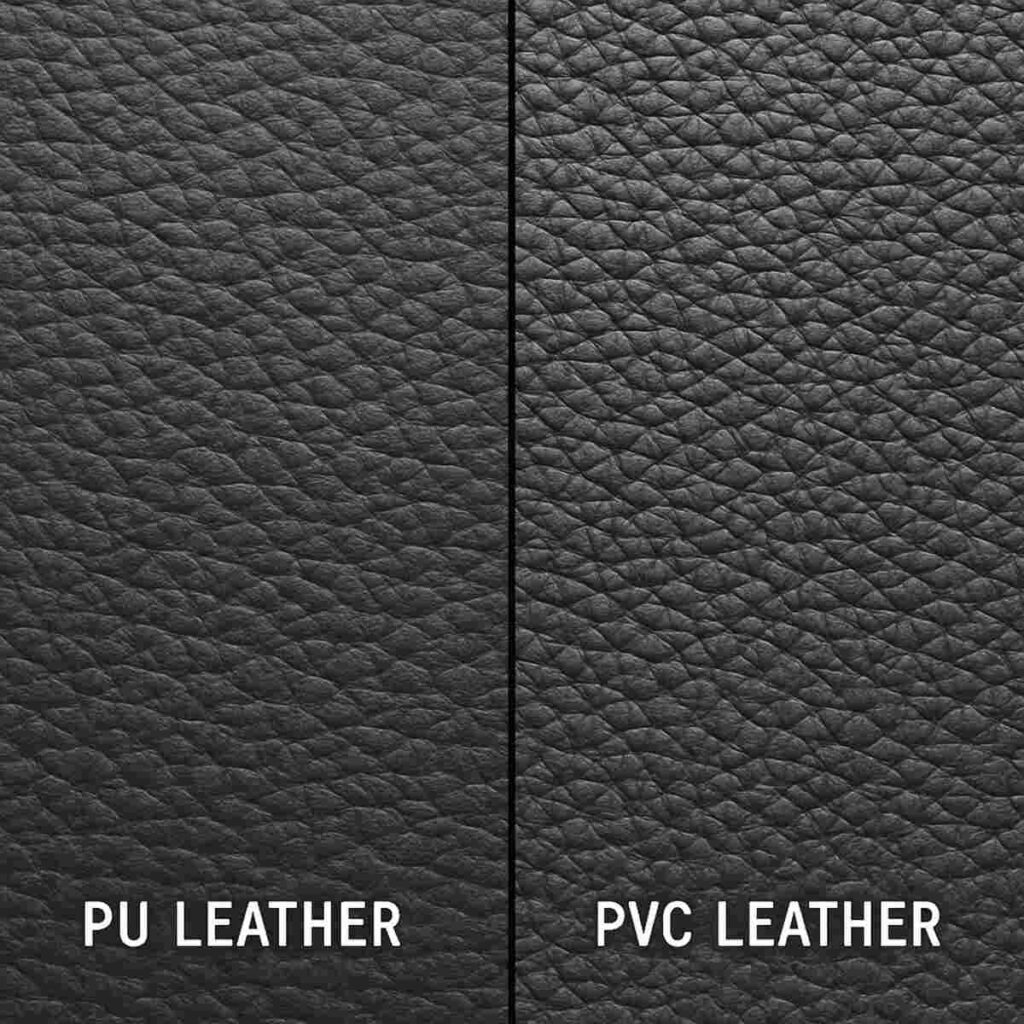
The debate between Polyurethane (PU) and Polyvinyl Chloride (PVC) is fundamental to the industry. A thorough PU leather vs PVC leather durability comparison reveals why PU has become the material of choice for premium brands.
- PVC Leather: Historically the most common artificial leather, PVC is made by adding plasticizers to PVC resin. It is highly resistant to weather and extremely cheap. However, PVC is rigid, prone to cracking over time, and traps heat. From an environmental standpoint, PVC production releases dioxins, making it the least sustainable option.
- PU Leather: Polyurethane leather is created by coating a fabric backing (like cotton or polyester) with a flexible polymer. PU is vastly superior in hand feel. It mimics the soft, buttery texture of genuine leather, flexes without cracking, and is significantly lighter. While PVC might withstand brutal outdoor weather slightly better, PU wins handily in longevity, aesthetic appeal, and environmental safety.
The Pinnacle of Innovation: Microfiber Leather
If you are looking for the absolute highest quality faux leather, Microfiber is the answer. Microfiber synthetic leather is a third-generation artificial leather. It replicates the actual three-dimensional microscopic structure of natural collagen fibers found in animal hides, using high-density non-woven microfibers coated with premium polyurethane.
A practical microfiber leather vs genuine animal hide cost analysis reveals massive benefits for modern brands:
- Cost Efficiency: While microfiber is the most expensive synthetic leather, it is typically 30% to 50% cheaper than high-grade genuine leather.
- Yield Rate: Genuine leather hides have irregular shapes, scars, and blemishes, leading to a cutting yield of roughly 60-70%. Microfiber leather comes in continuous rolls, offering a cutting yield of 99%, drastically reducing waste and per-unit cost.
- Performance: Microfiber is lighter, more uniform in thickness, and often surpasses genuine leather in tear resistance and tensile strength.
Performance Metrics for Premium Applications
When sourcing for high-demand industries such as furniture or footwear, you must closely examine the breathability and abrasion resistance of high-grade PU.
- Breathability: High-grade PU and Microfiber are designed with micro-pores that allow moisture vapor to escape. This Moisture Vapor Permeability (MVP) ensures that a faux leather sofa or pair of shoes doesn’t feel sticky or uncomfortably hot during use.
- Abrasion Resistance: Factories test durability using the Martindale or Taber abrasion tests. Premium PU for commercial upholstery can withstand upwards of 100,000 double rubs, ensuring it won’t peel or flake even in high-traffic environments.
Specialized Formulations: Automotive Vegan Leather
The automotive industry has specific, highly rigorous standards. If you are sourcing materials for car interiors, you must demand specific automotive grade vegan leather technical specifications.
Automotive faux leather must undergo strict testing for:
- UV Resistance: It must not fade or degrade after prolonged exposure to direct sunlight.
- Temperature Extremes: It must feature cold-crack resistance down to -30°C and heat resistance up to 90°C without warping.
- Flame Retardancy: Materials must meet the requirements of FMVSS 302 (Federal Motor Vehicle Safety Standard).
- Anti-Fogging: The leather must not release chemical vapors that create a hazy film on the inside of car windows when exposed to heat.
The Sourcing Map: Key Manufacturing Hubs in China
China is a vast country, and its manufacturing sectors are heavily regionalized. Knowing the best regions for leather manufacturing in China will save you time and money, ensuring you source directly rather than through a chain of middlemen.
Wenzhou, Zhejiang Province: The Synthetic Leather Capital
Wenzhou is historically known as the synthetic leather capital of China. This region is home to hundreds of factories specializing in PU and PVC production. If you are looking for a high-volume faux leather manufacturer for footwear, garments, or bags, Wenzhou is often the most cost-effective place to start. The supply chain here is dense, meaning raw materials, backing fabrics, and chemical suppliers are all located within a few miles of each other.
Dongguan, Guangdong Province: High-End and Automotive
Dongguan, positioned between Guangzhou and Shenzhen, focuses heavily on premium, high-tech manufacturing. If you are looking for water-based PU, high-grade microfiber, or automotive/aviation grade vegan leathers, Dongguan’s factories are generally better equipped with advanced R&D departments and stringent quality control systems.
Guangzhou Shiling International Leather City
For buyers interested in smaller quantities, immediate stock, or trend-spotting, a trip to Guangzhou is essential. A comprehensive overview of the Guangzhou Shiling International Leather City Market reveals it to be one of the largest wholesale markets for leather and faux leather in the world.
Located in the Huadu District of Guangzhou, the Shiling market boasts over 4,000 shops and wholesale distributors.
- The Vibe: It is a bustling, fast-paced environment where you can find every imaginable texture, color, and print.
- Who it’s for: Ideal for fashion brands, handbag designers, and buyers who want to purchase off-the-shelf rolls without waiting for production lead times.
- Word of Caution: Many shops here are trading companies, not direct factories. While great for sourcing quick stock, large-scale continuous production might require bypassing the market and dealing directly with the factories backing these stalls.
Mastering the Sourcing Process: A Step-by-Step Approach
Sourcing textiles internationally can seem daunting, but breaking it down into a systematic process minimizes risk and maximizes efficiency. Here is a comprehensive, step-by-step guide to sourcing upholstery fabric overseas, specifically tailored to the synthetic leather industry.
Step 1: Define Your Specifications Thoroughly
Before reaching out to any China faux leather supplier, you must know exactly what you need. A vague inquiry will result in vague, unreliable quotes. Prepare a “Tech Pack” or specification sheet that includes:
- Application: (e.g., residential sofa, hospital waiting room chair, women’s handbag).
- Material Base: (e.g., Water-based PU, Microfiber).
- Backing Fabric: (e.g., woven cotton, knitted polyester).
- Thickness: Usually measured in millimeters (e.g., 0.8mm for garments, 1.2mm for upholstery).
- Width: Standard rolls are usually 54 inches (137 cm) wide.
- Performance Requirements: (e.g., Martindale rub count, waterproof, anti-microbial).
Step 2: Identify and Vet Suppliers
Use platforms like Alibaba and Global Sources, or attend trade shows such as the Canton Fair or APLF Leather & Materials+, to find potential partners. Look for suppliers who explicitly state they are a “manufacturer” rather than a “trading company” if you are looking to scale.
Step 3: Requesting Swatches and Sample Rolls
Never place a bulk order based on photos. Request an “A4 size swatch book” or “hanger samples” of their available materials. Once you find a material you like, order a sample roll (typically 5 to 10 meters) to create a physical prototype of your product. This allows you to test how the material cuts, sews, and behaves on the actual production line.
Step 4: Understanding Minimum Order Quantities (MOQs)
A common question for new importers is, what are the minimum order quantities for bulk leather?
- In-Stock Wholesale: If you buy from a faux leather wholesale distributor in markets like Shiling, the MOQ can be as low as 1 to 10 meters per color.
- Custom Production: For a factory to set up the production line, dye the resins, and run the embossing machines, the standard MOQ is generally between 300 to 1,000 meters per color and per specification.
- Tip for lower MOQs: If you need less than the factory’s stated MOQ, ask if they are currently running a production batch of that specific base material for another client. You may be able to “piggyback” on their production run for a smaller quantity.
Step 5: Trial Order and Lab Testing
Before committing to thousands of meters, place a trial order (e.g., the exact MOQ). Send a cutting from this trial order to an independent laboratory (like SGS or Intertek) to verify that the technical specifications match the supplier’s claims.
Ensuring Quality and Compliance
When dealing with overseas manufacturing, trust is good, but verification is better. Knowing how to verify chinese synthetic leather factory quality is the ultimate safeguard for your brand’s reputation.
Remote and On-Site Verification
- Business License Check: Always request the supplier’s business license and ISO 9001 (Quality Management System) certificates. You can use third-party services to verify the company’s registration in China.
- Video Audits: In the post-pandemic era, live video tours are standard. Ask the sales representative to walk you through the factory floor. Look for organization, safety protocols, and the scale of the machinery.
- Third-Party Factory Audits: For a few hundred dollars, companies like V-Trust or QIMA will send an inspector to the factory before you place an order. They will assess the factory’s production capacity, machinery condition, and quality control systems.
Navigating Global Environmental Standards
If you are importing into Europe or North America, regulatory compliance is non-negotiable. Ensuring SGS and REACH compliance for exported textiles is the most critical hurdle in your sourcing journey.
- REACH Regulation (EU): REACH (Registration, Evaluation, Authorisation and Restriction of Chemicals) is an EU regulation designed to protect human health and the environment. Faux leather exported to the EU must be free of restricted SVHCs (Substances of Very High Concern). In faux leather, this usually means strict testing for heavy metals (lead, cadmium), phthalates (often used in cheap PVC), and azo dyes.
- California Proposition 65 (USA): If selling in the US, particularly California, your leather must not contain chemicals known to cause cancer or reproductive toxicity.
- Actionable Advice: Do not take a supplier’s word for it that their material is “REACH compliant.” Demand to see a recent, valid test report from a recognized laboratory (like SGS, TÜV Rheinland, or Intertek) for the exact material and color you are purchasing.
Inside the Factory: Manufacturing Processes and Overcoming Challenges
To negotiate effectively and solve problems, you need to understand how faux leather is actually made. The production line is a complex marriage of chemistry and heavy engineering.
The Embossing Process
One of the most fascinating aspects of artificial leather is how it acquires its texture—whether that is a deep elephant grain, a subtle calfskin texture, or a modern geometric pattern. The custom embossed synthetic leather manufacturing process usually involves the “Release Paper Transfer Coating” method:
- Release Paper Application: A continuous roll of special, heat-resistant silicone release paper (which has the negative impression of the desired texture) is fed into the machine.
- Polyurethane Coating: Liquid PU resin is scraped evenly onto the release paper.
- Baking and Curing: The coated paper runs through long industrial ovens to cure the PU layer.
- Adhesive and Backing: An adhesive layer is applied, and the base fabric (cotton, polyester, or microfiber) is pressed onto the wet PU.
- Second Curing: The material goes through another set of ovens to bond the fabric to the PU.
- Peeling: Once cooled, the release paper is peeled away from the finished synthetic leather. The leather now perfectly bears the texture of the paper. The paper is then rolled up and reused for future batches.
Tackling Color Inconsistencies
A major headache for brands is receiving a beautiful sample, only to find the bulk order looks slightly different. Solving color consistency issues in large scale production requires strict protocols.
Color variation (often measured as ΔE or Delta E) happens due to slight differences in dye batches, ambient humidity during production, or variations in the base fabric. To mitigate this:
- Lab Dips: Always request “lab dips”—small 5×5 cm swatches of the actual dyed PU—before bulk production begins. Approve them under a standardized light box (e.g., D65 daylight).
- Master Samples: Keep a master sample of your approved color. Send half of it back to the factory signed and dated.
- Spectrophotometers: Ask if the factory uses digital spectrophotometers to measure color matches, rather than relying solely on the human eye.
- Dye Lot Management: Accept that minor batch-to-batch variations (usually a Delta E of less than 1.5) are standard in the textile industry. Ensure your factory manages “dye lots” carefully, meaning they shouldn’t mix rolls from different production days in the same shipment.
Logistics, Negotiation, and Risk Management
Once your eco-friendly faux leather is manufactured, the final hurdle is getting it out of China and into your warehouse safely and cost-effectively.
Mastering Trade Negotiations
Building a strong relationship with your supplier goes beyond just haggling over the price per meter. Negotiating trade terms with international fabric exporters involves discussing payment structures and Incoterms.
- Payment Terms: The industry standard for new relationships is 30% T/T (Telegraphic Transfer) deposit to start production, and 70% T/T balance before shipment (after a successful QC inspection). Never pay 100% upfront. As your relationship matures, you may negotiate better terms, such as a 30% deposit and 70% against a copy of the Bill of Lading (B/L).
- Incoterms: Understand the difference between EXW, FOB, and CIF.
- EXW (Ex Works): You are responsible for all shipping costs and logistics from the factory door.
- FOB (Free on Board): The factory pays to get the goods loaded onto the ship at the nearest Chinese port (e.g., FOB Shenzhen or FOB Ningbo). This is highly recommended as it gives you control over the sea freight forwarder.
- CIF (Cost, Insurance, and Freight): The supplier handles shipping to your destination port. While easier, suppliers often mark up the freight costs, and you may face hidden local handling fees upon arrival.
Avoiding Common Import Pitfalls
Even with a great product, logistical errors can ruin a shipment. Avoiding common pitfalls when importing faux leather requires attention to packaging and documentation details.
- The Creasing Problem: Faux leather, especially thicker upholstery grades, has a “memory.” If it is folded or compressed during transit, the creases may become permanent. Actionable Tip: Insist in your contract that the material must be rolled on hard cardboard tubes (minimum 3-inch diameter), wrapped tightly in plastic, and packed in hard outer paper tubes or woven bags. Never allow the factory to fold the fabric to save shipping space.
- Moisture Damage: Sea freight takes weeks. Changes in humidity inside shipping containers can cause condensation (container rain), leading to mold on the fabric backing. Ensure the factory places ample silica gel desiccant packets inside the plastic wrapping of every roll.
- Customs Delays due to HS Codes: Ensure your supplier uses the correct HS (Harmonized System) code on the commercial invoice. Synthetic leather is usually classified under Chapter 39 (Plastics) or Chapter 59 (Impregnated, coated, covered, or laminated textile fabrics). Using the wrong code can result in massive delays, customs audits, and unexpected tariff hikes at your destination port.
Embracing the Future of Faux Leather Manufacturing
The landscape of sourcing textiles is evolving faster than ever. China’s proactive shift towards sustainability has transformed it from a mass producer of cheap imitations into a global leader in high-tech, eco-friendly materials science.
By prioritizing water-based polyurethanes and advanced microfibers, brands can now offer products that rival genuine leather in durability, breathability, and aesthetic appeal—without the environmental and ethical compromises.
Successfully navigating this market requires diligence. From selecting the right China faux leather supplier in hubs like Wenzhou or Guangzhou to understanding the intricacies of REACH compliance and managing large-scale quality control, the effort you put into the sourcing process dictates the quality of your final product.
Use this guide as your roadmap. Build strong, communicative relationships with your manufacturing partners, demand transparency and rigorous testing, and you will be well-positioned to leverage the cutting-edge sustainable practices of China’s modern faux leather industry.