


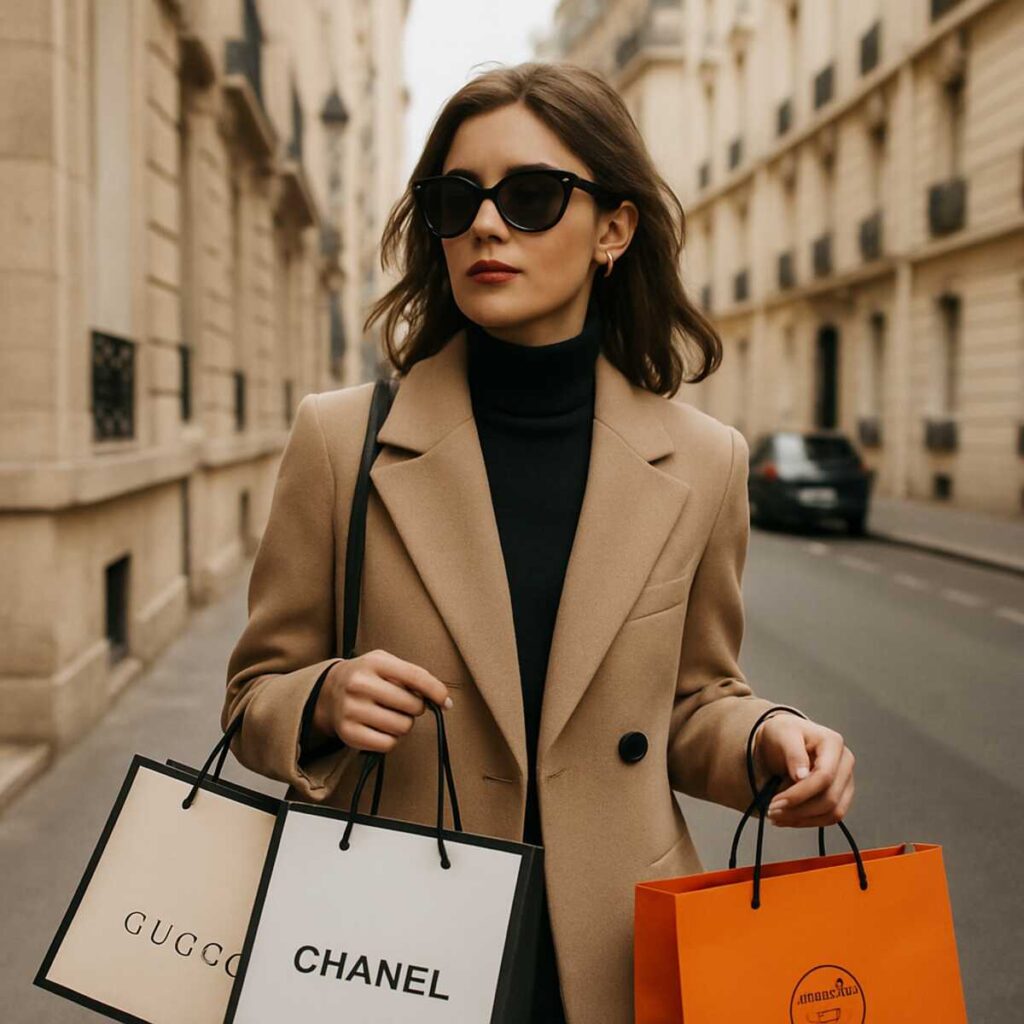
When we speak of the pinnacle of sartorial excellence, our minds inevitably travel across the Atlantic to the cobblestone streets of Paris, the sun-drenched piazzas of Milan, and the historic tailoring districts of London. Europe Luxury Fashion is not merely an industry; it is a cultural institution deeply woven into the fabric of Western history. For centuries, the continent has been the undisputed global epicenter of style, setting trends that ripple across the globe and defining what it means to live in elegance. The best guide to finding Europe Luxury Fashion.
Whether you are a seasoned collector of haute couture or a fashion enthusiast planning your first trip across the pond to acquire a coveted handbag, understanding the landscape of european luxury brands is essential. The continent offers more than just high-end boutiques; it offers an immersion into centuries of artistry, where generations of artisans have perfected their craft.
This comprehensive guide will take you on an expansive journey through the world of European fashion. We will explore the legacy of iconic houses, delve into the intricacies of craftsmanship, navigate the practicalities of luxury shopping abroad, and look toward the future of this glittering industry.
The Titans of European Fashion: A Tale of Three Nations
To truly appreciate europe luxury fashion, one must understand its geographical pillars. France, Italy, and the United Kingdom each bring a distinct philosophy to design, manufacturing, and aesthetics.
The Historical Heritage of Parisian Fashion Houses
Paris is widely considered the birthplace of modern fashion. The historical heritage of Parisian fashion houses is built upon a foundation of royal patronage, meticulous dressmaking, and visionary designers who dared to redefine the female silhouette.
In the late 19th and early 20th centuries, Paris saw the rise of visionaries like Charles Frederick Worth, Paul Poiret, and later, Coco Chanel and Christian Dior.
- Chanel: Gabrielle “Coco” Chanel revolutionized women’s fashion by liberating them from restrictive corsets. She introduced jersey fabrics, the little black dress, and the iconic tweed suit—pieces that remain foundational to the brand today.
- Dior: In 1947, Christian Dior introduced his “New Look,” characterized by cinched waists and voluminous skirts. It was a celebration of opulence and femininity following the austerity of World War II.
- Hermès: Originally established in 1837 as a harness workshop catering to European noblemen, Hermès perfectly exemplifies how Parisian houses transitioned from equestrian roots to ultra-luxury leather goods and silk accessories.
- Louis Vuitton: Founded in 1854, this house began by creating flat-topped trunks that could be easily stacked in railway cars, fundamentally changing the art of travel.
Parisian fashion is characterized by its conceptual artistry, structural precision, and an enduring aura of exclusivity. It is fashion as high art.
Artisan Manufacturing Processes in Italian Ateliers
If Paris is the intellect of European fashion, Italy is its beating heart. Italian luxury is defined by “sprezzatura”—a studied carelessness, an effortless elegance. More importantly, Italy is the undisputed master of materials, particularly leather and textiles.
The artisan manufacturing processes in Italian ateliers have been passed down through generations. Unlike the centralized, top-down structure of French haute couture, Italian fashion grew organically from regional specialties: silk from Como, leather from Florence, and wool from Biella.
- Gucci: Founded in Florence in 1921, Gucci began as a producer of fine leather goods inspired by the equestrian lifestyle. Today, even as a global megabrand, the hand-stitched details on a bamboo-handle bag reflect a century of Florentine leather craftsmanship.
- Prada: Starting as a leather goods shop in Milan in 1913, Prada eventually revolutionized luxury by introducing industrial nylon into high fashion, blending utilitarian materials with impeccable Italian construction.
- Bottega Veneta: Born in Vicenza, this house developed the Intrecciato weave—a technique of weaving leather strips together to create a durable, logo-less, and instantly recognizable pattern that requires immense manual dexterity.
Italian ateliers prioritize the tactile experience. The drape of the fabric, the buttery softness of the calfskin, and the meticulous hand-finishing define their output.
Bespoke Tailoring Traditions of Savile Row
While France and Italy largely shaped women’s luxury fashion, the United Kingdom holds the crown for classic menswear. At the center of this legacy are the bespoke tailoring traditions of Savile Row.
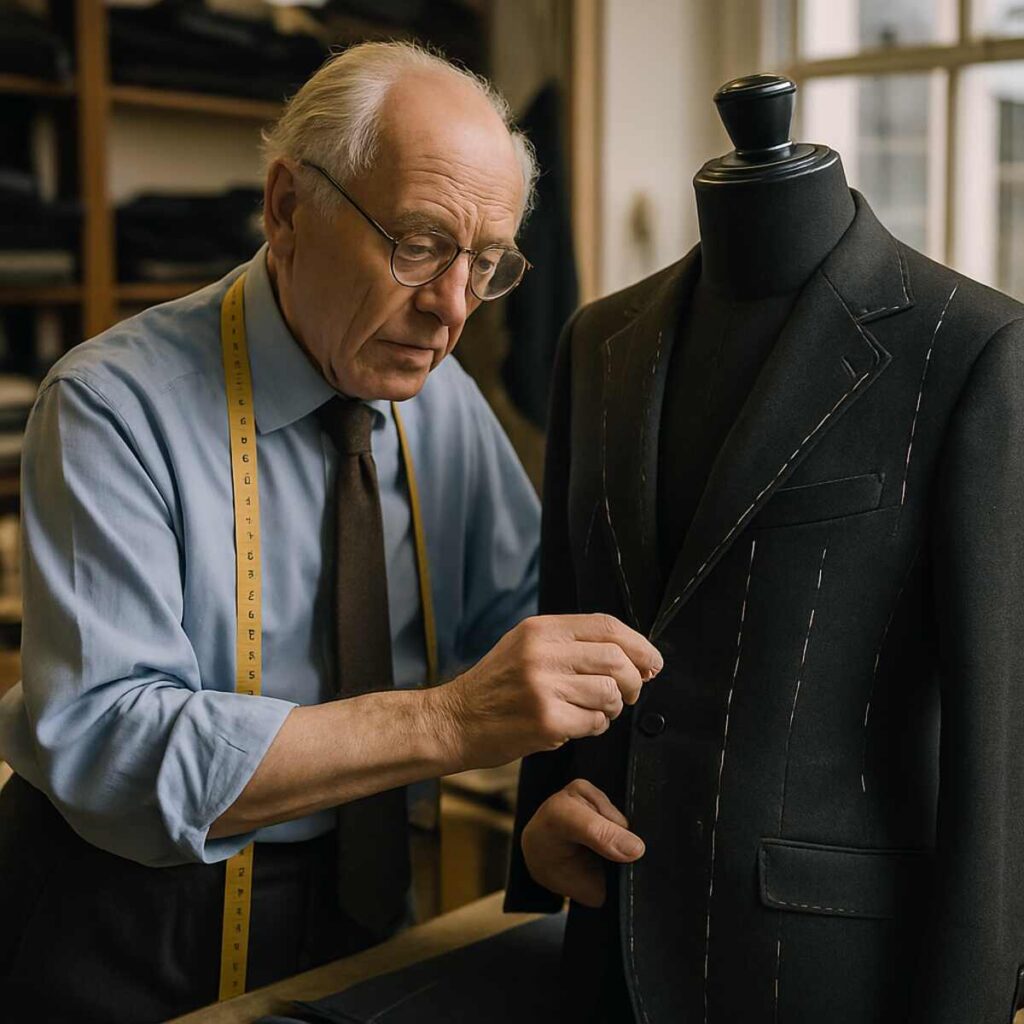
Located in Mayfair, London, Savile Row has been providing bespoke tailoring to royalty, aristocrats, and global icons since the late 18th century. A true bespoke suit from Savile Row (such as those from Gieves & Hawkes, Henry Poole & Co., or Huntsman) is not merely made to measure; it is built from scratch around the client’s exact body.
- The Consultation: Master tailors assess the client’s posture, lifestyle, and preferences.
- The Pattern: A unique paper pattern is drafted exclusively for that individual—no block patterns are used.
- The Fittings: Multiple fittings are required as the suit is constructed by hand, ensuring an unparalleled fit that drapes perfectly over the wearer’s unique physique.
This dedication to heritage and uncompromising quality makes British tailoring a vital, yet entirely distinct, component of the European luxury ecosystem.
French vs Italian Luxury Brand Craftsmanship: A Comparison
A common debate among collectors revolves around French vs Italian luxury brand craftsmanship. Which is superior? The answer lies not in objective quality, but in differing philosophies.
- The French Approach: French craftsmanship is deeply rooted in the traditions of Haute Couture. It is highly structured, deeply conceptual, and rigorously standardized. A French luxury bag, like an Hermès Kelly, is a marvel of architectural structure. The edges are painted with geometric precision, and the silhouette is rigid and formal. French luxury is about achieving a state of flawless perfection and maintaining a rigid brand identity.
- The Italian Approach: Italian craftsmanship is generally softer, more sensual, and celebrates the natural qualities of the raw materials. An Italian leather bag, such as a slouchy Bottega Veneta Jodie, highlights the suppleness of the leather. Italian tailoring emphasizes a lighter construction, often removing heavy shoulder pads and canvas to allow the garment to move naturally with the body.
Ultimately, choosing between the two depends on whether you prefer the architectural majesty of Paris or the relaxed, tactile luxury of Milan and Florence.
The Business of Elegance: How Luxury is Orchestrated
Behind the romantic facade of sketching designers and quiet ateliers lies a fiercely competitive, multi-billion-dollar global industry. The modern landscape of European luxury is largely controlled by massive corporate entities that have consolidated the market over the past few decades.
Top Luxury Fashion Conglomerates and Their History
To truly understand modern luxury, one must examine the top luxury fashion conglomerates and their history. These groups provide the financial backing, supply chain dominance, and real estate leverage that allow heritage brands to thrive in a globalized world.
1. LVMH (Moët Hennessy Louis Vuitton) The undisputed titan of luxury, LVMH was formed in 1987 through the merger of fashion house Louis Vuitton with wines and spirits company Moët Hennessy. Under the aggressive and visionary leadership of Bernard Arnault, LVMH has acquired over 70 distinguished brands (known as “Maisons”). Their portfolio spans fashion (Dior, Fendi, Celine, Givenchy), jewelry (Tiffany & Co., Bulgari), and cosmetics. LVMH’s strategy involves fiercely protecting the heritage of each house while scaling their operations globally.
2. Kering Originally founded as a timber-trading company by François Pinault in 1962, Kering pivoted entirely into luxury retail in the late 1990s. The turning point was the fierce, highly publicized battle with LVMH for control of Gucci. Today, Kering owns Gucci, Saint Laurent, Bottega Veneta, Balenciaga, and Alexander McQueen. Kering is known for taking bold creative risks, often appointing young, avant-garde creative directors to breathe modern relevance into dusty heritage labels.
3. Richemont Founded by South African businessman Johann Rupert in 1988, Richemont focuses heavily on “hard luxury” (watches and jewelry) but holds significant sway in fashion and accessories. Their crown jewels include Cartier and Van Cleef & Arpels, but they also own fashion houses like Chloé, Alaïa, and the luxury online retailer Net-a-Porter (part of YOOX Net-a-Porter Group).
These conglomerates have transformed family-owned artisan shops into global powerhouses, ensuring that the legacy of European luxury survives the economic turbulence of the modern era.
Evolution of Haute Couture in Modern Society
At the absolute apex of the luxury pyramid sits Haute Couture. Protected by French law, the term “Haute Couture” can only be used by brands designated by the Fédération de la Haute Couture et de la Mode. To qualify, a house must employ at least 15 full-time artisans in a Paris atelier and present a collection of at least 50 original designs twice a year.
The evolution of haute couture in modern society is a fascinating study in adaptation. In the 1950s, thousands of affluent women bought couture directly. Today, the global clientele for true haute couture numbers fewer than 4,000 individuals globally.
So why does it still exist? Today, haute couture functions as the ultimate marketing tool. It is the research and development lab of the fashion world. The spectacular, avant-garde, million-dollar dresses worn by celebrities on the Oscars red carpet generate intense media buzz, creating a “halo effect.” This halo effect makes the brand highly desirable, which in turn drives the mass sales of the brand’s ready-to-wear lines, perfumes, sunglasses, and cosmetics. Couture is the dream; lipstick is the reality.
The Art of Acquiring Luxury: Shopping in Europe
For fashion aficionados worldwide, traveling to Europe is akin to a pilgrimage. Shopping in the home countries of these legendary designers is not just about aesthetics; it is a highly strategic financial decision.
Why Designer Goods Cost Less in Europe
A question often asked by international travelers is why designer goods cost less in Europe. It is not a myth; the price discrepancy is real, and it comes down to basic economics and supply chain logistics.
- No Import Duties or Tariffs: When a Chanel bag made in France is sold in the United States, Asia, or the Middle East, it is subject to import taxes, tariffs, and cross-border transportation costs. In Paris, these costs are nonexistent.
- Brand Pricing Strategies: European brands price their goods domestically in Euros. When pricing for foreign markets, they must account for currency fluctuation risks and higher operational costs in those markets (like premium real estate in Tokyo or New York).
- The VAT Refund: This is the most significant factor for travelers. European retail prices include a Value Added Tax (VAT), which ranges from 19% to 22% depending on the country. Non-EU residents are eligible to have a large portion of this tax refunded when they leave the continent.
When you combine lower base retail prices with a generous tax refund, international shoppers can often save between 15% and 30% on luxury goods compared to buying them in their home countries.
How to Claim VAT Refunds for Luxury Shopping
Understanding how to claim VAT refunds for luxury shopping is crucial for maximizing your budget. While the process may seem daunting to a first-timer, following these steps will ensure a smooth experience.
Step 1: Bring Your Passport To initiate a tax-free purchase, you must prove you are a non-EU resident. Always carry your physical passport when luxury shopping; a photocopy or a photo on your phone will generally not be accepted by high-end boutiques.
Step 2: Ask for Tax-Free Forms at the Register When making your purchase, tell the Sales Associate (SA) that you want to claim the tax refund. They will fill out the necessary paperwork. Companies like Global Blue or Planet usually process these refunds. Ensure your name on the form matches your passport exactly.
Step 3: Arrive Early at the Airport On your day of departure from the European Union (note: if you are visiting multiple EU countries, you process the refund in the last EU country you depart from), arrive at the airport at least an hour earlier than you normally would.
Step 4: Visit Customs Before Checking Bags You must take your completed forms, your passport, your boarding pass, and the unused goods in their original packaging to the customs desk. The customs officer needs to visually verify the goods before stamping your forms. Do not pack your new luxury items in your checked luggage before completing this step!
Step 5: Get Your Refund Once stamped, take the forms to the refund counter (or use the automated kiosks like the PABLO system in France). You can choose to get the refund in cash (which incurs a higher fee) or refunded to your credit card (which takes longer but yields a higher return).
Exclusive Luxury Shopping Etiquette for First-Time Buyers
Stepping into a flagship Dior or Louis Vuitton boutique in Paris or Milan can be intimidating. The environment is hushed, the security is discreet but present, and the products are displayed like museum artifacts. Understanding exclusive luxury shopping etiquette for first-time buyers will vastly improve your experience.
- Book an Appointment: In a post-pandemic world, luxury shopping is highly regulated. To avoid standing in lines outside the store for hours, always book an appointment online a few weeks before your trip.
- Dress Appropriately: While you don’t need to wear a ballgown, presenting yourself neatly commands respect. You are asking an SA to spend an hour or more curating items for you; dressing well signals that you are a serious client.
- Be Polite but Direct: It is perfectly acceptable to state your budget and what you are looking for. SAs appreciate a client who knows what they want.
- Build a Relationship: If you plan on buying multiple items or returning in the future, try to stick with one SA. Building a relationship with a specific SA is the only way to get offered “quota bags” (like the Hermès Birkin or Kelly) or hard-to-find limited edition pieces.
- Handle Goods with Care: Always ask before picking up an item. If trying on leather goods, ensure you aren’t wearing sharp jewelry that could scratch the delicate calfskin.
Where to Shop: The Ultimate European Itinerary
Knowing how to shop is only half the battle; knowing where to go is equally important. Europe offers a variety of retail environments, from historic flagships to sprawling modern outlets.
Navigating Flagship Stores in Milan’s Golden Quad
Milan is the commercial capital of Italian fashion, and at its center lies the Quadrilatero della Moda (The Fashion Square). Navigating flagship stores in Milan’s Golden Quad is an essential experience for any luxury lover.
Bounded by four elegant streets—Via Montenapoleone, Via Alessandro Manzoni, Via della Spiga, and Corso Venezia—this district houses the most important boutiques in the world.
- Via Montenapoleone: This is the main artery. Here, you will find the historic Prada flagship, the sprawling Armani multi-concept store, and the magnificent Gucci boutique. The architecture is as stunning as the fashion, with hidden courtyards revealing private VIP shopping suites.
- Strategy: Start your day early. The Golden Quad is best experienced in the morning before the heavy tourist crowds arrive. Take a break for an espresso at Pasticceria Marchesi (owned by the Prada Group) to soak in the ultra-chic atmosphere.
Best Luxury Fashion Marketplaces in Europe
If you prefer a curated selection of multiple brands under one roof, department stores and multi-brand boutiques are the way to go. The best luxury fashion marketplaces in europe offer unparalleled curation.
Physical Marketplaces:
- Galeries Lafayette & Printemps (Paris): Located on Boulevard Haussmann, these historic department stores are architectural marvels featuring stunning glass cupolas. They offer dedicated luxury floors where you can browse dozens of top brands simultaneously.
- Harrods & Selfridges (London): Harrods in Knightsbridge offers a deeply traditional, opulent shopping experience, while Selfridges on Oxford Street is known for its edgy, avant-garde curation and exclusive pop-ups.
- La Rinascente (Milan/Rome): Italy’s premier luxury department store, offering an immaculate edit of both global powerhouses and niche Italian designers.
Digital Marketplaces: European luxury isn’t confined to brick-and-mortar. The continent gave birth to some of the most powerful digital luxury platforms.
- MyTheresa: Based in Munich, Germany, this platform is renowned for its highly curated, ultra-luxurious edit of the world’s best designers.
- Farfetch: Founded in London, Farfetch operates uniquely by connecting consumers directly with inventory from hundreds of independent luxury boutiques across Europe, allowing you to find rare pieces from small towns in Italy or France.
Best Luxury Outlet Malls in Western Europe
For the savvy shopper looking for designer labels without the boutique price tag, Europe boasts some of the most sophisticated outlet shopping in the world. The best luxury outlet malls in Western Europe are designed to mimic quaint villages and offer out-of-season goods at 30% to 70% off retail prices.
- Bicester Village (UK): Located near Oxford, this is arguably the most famous luxury outlet in the world. It features over 160 boutiques, including Dior, Gucci, and Celine. It is so popular that it has its own dedicated train station from London.
- La Vallée Village (France): Just a stone’s throw from Disneyland Paris, this outlet is the best place to find discounted French brands like Givenchy, Balenciaga, and Yves Saint Laurent.
- Serravalle Designer Outlet (Italy): The largest designer outlet in Europe, located between Milan and Genoa. It is a treasure trove for Italian tailoring, leather goods, and premium footwear, featuring brands like Prada, Fendi, and Brunello Cucinelli.
- The Mall Firenze (Italy): Nestled in the Tuscan hills outside Florence, this outlet is smaller but highly concentrated with ultra-luxury brands. It is particularly famous for its massive Gucci and Prada outlet stores.
Curating Your Collection: The Eye of a Connoisseur
Buying luxury fashion is not just about spending money; it is about curation. The difference between a consumer and a collector lies in the ability to recognize intrinsic value and lasting style.
Identifying Authentic Craftsmanship in Luxury Leather Goods
As prices for luxury handbags soar well into the thousands of dollars, knowing what you are paying for is critical. Identifying authentic craftsmanship in luxury leather goods requires engaging your senses.
- The Stitching: True luxury stitching is slightly angled and perfectly even. In top-tier artisan goods (like Hermès), look for the “saddle stitch,” which is done by hand using two needles. If a thread breaks in a saddle stitch, the whole seam will not unravel—unlike machine lockstitching used in mass production.
- Edge Painting: Look at the exposed edges of the leather (such as on the straps). Luxury artisans apply multiple layers of edge paint, sanding it down between each coat to create a smooth, durable, rubberized seal that protects the leather from fraying.
- Hardware Weight and Finish: Authentic luxury hardware is made from solid brass or palladium, not hollow plastics painted metallic. It should feel heavy and cold to the touch. Zippers should glide effortlessly without catching.
- Leather Sourcing: Learn the difference between “full-grain” (the highest quality, showing natural pores), “top-grain” (sanded to remove imperfections), and “corrected” leathers. European luxury houses command premium prices because they have first pick of the finest full-grain hides from local tanneries.
Investing in Timeless European Designer Pieces
The concept of fashion as an investment has gained massive traction. While clothing generally depreciates, certain iconic items hold or even increase their value over time on the resale market. Investing in timeless European designer pieces requires focusing on heritage icons rather than seasonal trends.
Here are the cornerstones of a timeless European collection:
- The Chanel Classic Flap Bag: Originally introduced by Coco Chanel in 1955 (the 2.55) and updated by Karl Lagerfeld in the 1980s. Chanel raises the price of this bag aggressively every year, making it a reliable store of value.
- The Hermès Birkin or Kelly: The undisputed kings of handbag investments. Due to artificial scarcity and unparalleled craftsmanship, these bags often sell for 50% to 100% more than their retail price immediately on the secondary market.
- The Burberry Trench Coat: A masterpiece of British engineering, originally created for soldiers in WWI. The water-resistant gabardine fabric and classic silhouette make it an immortal wardrobe staple.
- The Max Mara Camel Coat: Spun from exquisite Italian cashmere and camel hair, a Max Mara coat from Italy represents the pinnacle of quiet luxury and enduring elegance.
- Cartier Tank Watch: A quintessential piece of European “hard luxury.” Its Art Deco design has remained virtually unchanged for a century, ensuring it never goes out of style.
When buying for investment, always retain the original box, dustbag, tags, and authentic receipt, as these provenance items significantly increase resale value.
The Modern Shift: Sustainability and Ethics
While Europe Luxury Fashion is steeped in tradition, it cannot ignore the pressing demands of the 21st century. The industry is currently undergoing a massive transformation, shifting away from the conspicuous consumption of the past toward a more responsible future.
Sustainability Practices of High-End Heritage Brands
Historically, luxury fashion has been environmentally taxing. However, changing consumer values and impending European Union regulations are forcing a reckoning. The sustainability practices of high-end heritage brands have moved from niche marketing campaigns to core business strategies.
- Upcycling and Circularity: Brands are finally addressing deadstock (unsold inventory). Instead of burning it—a controversial practice historically used to protect brand exclusivity—houses like Loewe and Miu Miu are releasing collections made entirely from upcycled vintage fabrics and deadstock materials.
- Material Innovation: Prada made headlines with its “Re-Nylon” project, transitioning its iconic nylon bags entirely to regenerated nylon created from ocean plastic, fishing nets, and textile fiber waste.
- Regenerative Agriculture: The Kering Group has heavily invested in regenerative farming practices for its leather and cashmere supply chains, aiming to restore soil health and biodiversity rather than merely extracting resources.
- Transparency: Blockchain technology is being utilized by consortiums like the Aura Blockchain Consortium (founded by LVMH, Prada, and Cartier). This provides consumers with a digital certificate of authenticity that tracks a product’s lifecycle from raw material sourcing to the boutique floor, ensuring ethical labor practices.
Future of Ethical Luxury Manufacturing in Europe
As we look ahead, the future of ethical luxury manufacturing in Europe is bright, but it requires a delicate balancing act. How do brands scale their massive global operations without diluting the artisanal quality or harming the planet?
The future lies in hyper-localizing production. European houses are heavily investing in training the next generation of local artisans. In Italy, brands are opening specialized schools to teach young people the dying arts of pattern cutting, leather weaving, and cobbling.
Furthermore, “Quiet Luxury” is taking precedence. Consumers are increasingly rejecting loud, logo-heavy, trend-driven pieces in favor of highly ethical, impeccably crafted garments meant to last a lifetime. This shift aligns perfectly with the foundational values of European luxury: buy less, buy better, and buy heritage.
Ethical luxury will soon no longer be an optional “eco-friendly” line within a brand; it will be the baseline standard required to operate within the European market. The definition of a luxury good is expanding. It is no longer just about the quality of the stitching or the prestige of the logo; true luxury now encompasses the moral and environmental integrity of the item’s creation.
Conclusion: The Enduring Allure of European Luxury
The realm of europe luxury fashion is a fascinating intersection of art, history, commerce, and craftsmanship. From the majestic, architectural silhouettes born in the drawing rooms of Paris, to the buttery, tactile leather masterworks emerging from Tuscan workshops, to the razor-sharp bespoke tailoring of London’s Savile Row, European fashion offers an unparalleled sartorial journey.
Understanding this world goes beyond simply recognizing a famous logo. It requires appreciating the generations of artisans who dedicate their lives to perfection. It involves navigating the strategic business of global conglomerates, mastering the savvy logistics of VAT refunds and outlet shopping, and developing a discerning eye for true, investment-grade quality.
As the industry pivots toward a more sustainable and ethical future, the core tenets of European luxury remain steadfast: an unwavering commitment to beauty, a deep respect for heritage materials, and the creation of timeless pieces designed not just to be worn, but to be cherished across generations. Whether you are browsing a digital marketplace from home or stepping into a hushed flagship boutique in Milan’s Golden Quad, you are not just buying a product—you are acquiring a piece of cultural history.