


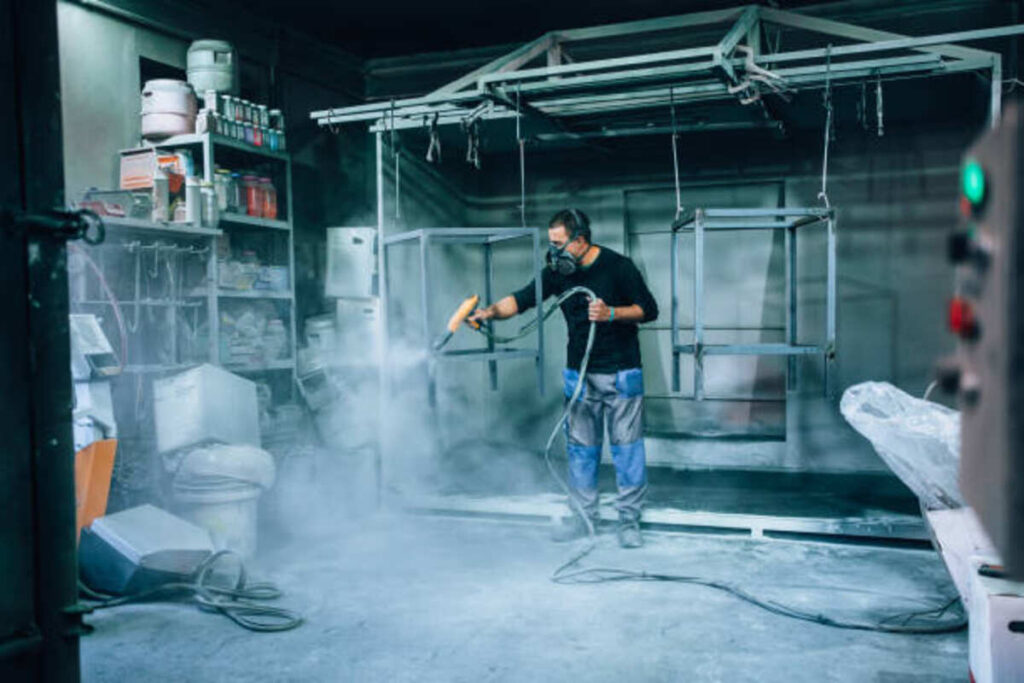
Automotive components demand more than a standard finishing line. Frames, brackets, suspension arms, and body parts vary widely in size, weight, and geometry, which means powder coating systems must be engineered with those differences in mind. A well-designed industrial powder coating oven and support equipment can adapt to changing vehicle platforms while delivering consistent powder coating quality.
Importance of System Layout for Automotive Part Flow
Automotive part flow begins long before parts enter powder coating ovens. The layout of spray booths, conveyors, pre-treatment stages, and powder curing ovens determines how smoothly components move from raw metal to finished coating. Efficient system layout reduces handling time and minimizes part congestion, which can otherwise affect coating consistency. Layout decisions also influence how easily new vehicle components can be introduced into the line. A thoughtfully arranged powder coating equipment package allows space for additional stages or modified racking systems. Automotive manufacturers evaluating powder coating equipment for sale often focus on floor space optimization because poor layout can limit throughput and increase labor demands.
Impact of Part Geometry on Oven Chamber Design
Automotive parts rarely have simple shapes. Crossmembers, engine mounts, and chassis components include tight corners, deep recesses, and hollow sections that complicate airflow and heat distribution inside powder coating ovens. Oven chamber design must account for these shapes so heat reaches every surface evenly.
Chamber width, height, and internal duct placement all affect how heated air circulates around complex components. Engineers designing powder coating systems study part geometry to ensure that the industrial powder coating oven provides uniform exposure during curing. Careful chamber design prevents under-cured edges and ensures complete powder coating coverage on irregular surfaces.
The Need for Targeted Heat Zones in Frame Coating
Vehicle frames and structural members often require higher heat capacity because of their thickness and mass. Targeted heat zones inside powder curing ovens allow certain areas of the chamber to deliver additional thermal energy without overheating lighter components.
Segmented heating systems help maintain balanced curing conditions across mixed part loads. This approach ensures that heavy steel frames receive adequate heat while smaller brackets cure properly at the same time. Adjustable heat zones improve efficiency within powder coating equipment, especially when automotive lines handle multiple part types in a single shift.
The Role of Conveyor Speed in Finish Consistency
Conveyor speed directly affects how long automotive components remain inside powder coating ovens. If the conveyor moves too quickly, coatings may not reach full cure; if it moves too slowly, parts can overheat and affect finish appearance.
Consistent travel speed becomes even more important in high-volume automotive lines. Controlled conveyor systems built into powder coating equipment help maintain precise dwell times through spray and curing stages. Reliable speed regulation supports even gloss, adhesion, and coating thickness across large production runs.
Advantages of Adjustable Racking for Varied Components
Automotive manufacturing rarely produces identical parts across all product lines. Adjustable racking systems allow operators to secure parts of different sizes without disrupting airflow or heat distribution inside powder curing ovens. Flexible rack configurations also improve efficiency when switching between vehicle platforms. Adjustable supports reduce the need for dedicated fixtures for every component type. Powder coating systems designed with adaptable racking increase line versatility while maintaining proper part spacing for uniform powder coating results.
The Effect of Cure Window Control on Coating Adhesion
Each powder formulation has a specific cure window defined by temperature and time. Maintaining that window ensures strong adhesion and long-term durability for automotive components exposed to vibration and harsh environments.
Accurate temperature control within an industrial powder coating oven allows operators to maintain consistent curing cycles. Advanced control systems in powder coating equipment regulate heat output and monitor part temperature to keep coatings within the required range. Stable cure window management reduces coating defects and improves resistance to chipping and corrosion.
Pre Treatment Integration Value for Metal Prep
Automotive parts often require thorough cleaning and surface conditioning before powder coating begins. Integrated pre-treatment stages remove oils, dirt, and surface contaminants that could interfere with adhesion. Seamless integration between pre-treatment and powder coating systems improves overall finish quality. Parts move directly from cleaning stages into drying and curing processes without unnecessary delays. A well-designed powder coating equipment package ensures that surface preparation and curing stages work together as a continuous system.
Air Circulation Function in Complex Part Coverage
Airflow inside powder coating ovens plays a significant role in achieving even heat exposure. Strong, balanced circulation ensures that heated air reaches inner cavities and recessed areas on automotive components.
Air circulation systems also help maintain consistent chamber temperature despite varying part sizes. Carefully designed ductwork and fan placement within powder curing ovens reduce the risk of cold spots. Effective airflow supports uniform powder coating performance across diverse automotive part geometries.
Benefits of Scalable Systems for Growing Auto Lines
Automotive manufacturing evolves quickly as new models and production volumes change. Scalable powder coating systems allow facilities to expand capacity without replacing entire finishing lines.
Modular design features in powder coating equipment provide room for additional spray booths or extended oven lengths. Companies reviewing a powder coating oven for sale often consider future expansion potential alongside current requirements. Scalable systems help protect long-term investment while supporting growth in automotive production.
Automotive manufacturers often rely on experienced equipment specialists to design powder coating systems tailored to complex vehicle components. Complete powder coating equipment packages include custom-configured powder coating ovens, adaptable racking, and industrial powder coating oven solutions built for demanding automotive standards.